
TV Unit Furniture Design: How to Plan the Perfect TV Wall for Your Home
TV Unit Furniture Design: How to Plan the Perfect TV Wall for Your Home
Featured Snippet
The proper TV unit furniture design should be based on several aspects, such as the television size, wall dimensions, viewing height, storage needs, cable organization, lighting and the furniture in the living room. When designing the TV wall, people should not focus their attention on the aesthetic value but rather on the use of the TV wall and its conformity to the room proportions.
Table of Contents
- Introduction
- Start With the Wall, Not the Television
- Get the TV Position and Viewing Height Right
- Design Storage Around Your Actual Lifestyle
- Make the TV Wall Work With the Rest of the Room
- Choose a Furniture Configuration That Fits Your Space
- Lighting, Electrical Planning and Cable Management
- 2026 Design Directions for More Refined TV Walls
- Mistakes That Can Ruin an Otherwise Good TV Unit
- Why Choose Ddesignery for Your TV Unit?
- Conclusion
- FAQs
Introduction
Though the television is a major component of the living room setting, the area surrounding it may receive less attention than needed when planning its placement and arrangement. Inefficient planning can make the storage inadequate, wires visible, and the TV itself either poorly positioned or dwarfed by the furniture.
A proper design of TV unit furniture design must blend with the room more than just suit the TV inside it. Room wall size, sofa placement, distance of viewing, storage requirements, lighting, and surrounding furniture all matter in designing the final TV furniture unit.
Modern TV furniture units have evolved past the simple cabinets under the TV sets.
Start With the Wall, Not the Television
One common mistake is choosing the television first and then trying to fit furniture around it. The wall should be assessed before finalising the design.
Find out how wide and tall the wall is, and where doors, windows, columns, power switches, skirting and electric points are located. For a narrow wall, a compact unit with vertical storage is perfect, and for a wider one, a more complete entertainment setup can be found.
Architecture around the wall is also very important. If the wall already has much going on with it, adding more shelves and details will only make the wall look untidy.
Living room TV furniture should therefore be designed based on the dimensions and architecture of the room and not according to some inspirational image.
Get the TV Position and Viewing Height Right
A TV unit must not only be aesthetically pleasing; however, comfort while viewing must be taken into account as well. The placement of the screen will depend on where the central seating spot is located and the size of the screen must be considered while measuring furniture.
The best way to go about this would be to design the TV, seating spot, and the furniture as a whole. The TV must be easy to view and the furniture placed around the TV should create sufficient room visually.
Sound system and any other entertainment equipment must also be considered while designing. It is easier to use a TV wall furniture as compared to a regular cabinet due to customisation options.
Design Storage Around Your Actual Lifestyle
Every household does not need the same storage for their television. The gaming console, speakers, and streaming device will need more storage than a household that only has a smart TV.
It is best to list out everything before building your cabinets or shelves, which includes set-top boxes, remotes, consoles, books, speakers, accessories, and the internet equipment.
One of the best TV storage furniture will include cabinets as well as open shelves, depending on your requirements.
It is necessary to ensure that you have enough storage but without too many cabinets.
Make the TV Wall Work With the Rest of the Room
A television wall should complement the rest of the living room rather than look like a separate installation. Its colours, materials and proportions should work with the sofa, flooring, doors and nearby furniture.
For example, warm wood elements can be paired with similar wood tones, while minimalist interiors may suit matte finishes and simple designs. Lighter colours can make smaller spaces feel more open, while contrasting tones can create a stronger focal point.
A designer TV unit should therefore blend with the overall interior while adding style without making the room feel visually heavy.
Choose a Furniture Configuration That Fits Your Space
Different room layouts need different TV unit configurations.
Room Type | Suitable Design |
|---|---|
Compact room | Floating console |
Medium room | Console + backdrop |
Large wall | Full-width unit |
Storage-heavy room | Cabinets + open niches |
Minimal interior | Low console + simple backdrop |
Popular Configurations
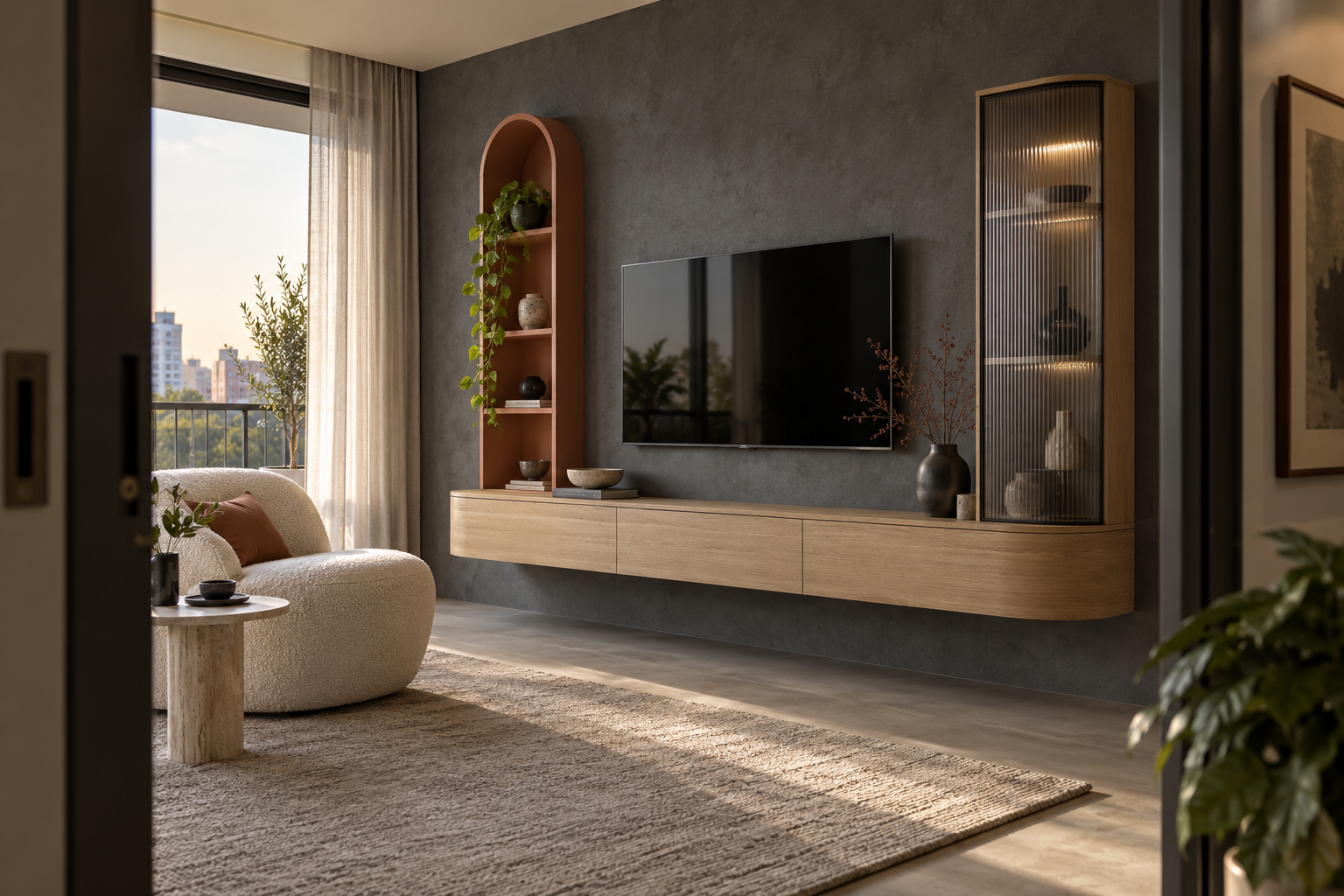
- Floating Console: Creates a lighter look and keeps the floor easy to clean.
- Full-Width Unit: Makes better use of larger walls with cabinets, panels and display areas.
- Built-In Unit: Integrates the TV area seamlessly with the room’s architecture.
- Low Console: Maintains a clean, horizontal appearance.
The right TV unit furniture design should be based on the room’s size, layout and storage needs rather than simply following a popular style.
Lighting, Electrical Planning and Cable Management
Lighting should be planned as part of the TV unit rather than added later. Soft lighting around panels or inside selected niches can add depth, while excessive LED lighting may cause glare.
Electrical planning is equally important. Sockets, TV connections, internet points and speakers should be considered before installation. A well-designed TV wall cabinet can conceal cables while keeping essential equipment accessible.
Ventilation should also be considered, as enclosed electronic devices can generate heat. Properly planned compartments help protect equipment and maintain a clean, functional setup.
2026 Design Directions for More Refined TV Walls
The latest TV furniture trends focus on comfort, functionality and clean aesthetics rather than excessive decoration.
- Warm finishes: Wood-inspired textures and neutral shades add warmth.
- Clean forms: Long, low units create a calm, contemporary look.
- Selective textures: Fluted and slatted details add depth without overwhelming the wall.
- Concealed storage: Hidden cabinets keep everyday clutter out of sight.
- Integrated lighting: Subtle LED lighting adds atmosphere to niches and floating units.
- Flexible designs: Adaptable furniture can accommodate changing technology and storage needs.
The key is to use trends thoughtfully, creating a TV wall that remains functional and stylish over time.
Mistakes That Can Ruin an Otherwise Good TV Unit
The most common TV unit design mistakes can be avoided with a focus on practicality, proportion and overall balance.
- Accurate measurements: Small errors can affect cabinets, panels, electrical points and installation.
- Avoiding excess decoration: Too many niches, shelves and textures can make the wall look cluttered.
- Considering sofa position: The TV should be positioned for comfortable viewing from the main seating area.
- Planning for future equipment: Leave space for a soundbar, gaming console or larger television.
- Coordinating finishes: Choose finishes that complement the flooring, sofa and surrounding furniture.
- Balancing storage: Combine closed cabinets with selected open sections for a lighter look.
- Using lighting carefully: Excessive lighting can cause glare and distract from the TV.
Why Choose Ddesignery for Your TV Unit?
Ddesignery offers customised modular furniture solutions, including TV units, kitchens, wardrobes, doors and panelling, vanities and specialised furniture. Its approach combines functionality, refined aesthetics and precision manufacturing to create furniture suited to individual spaces.
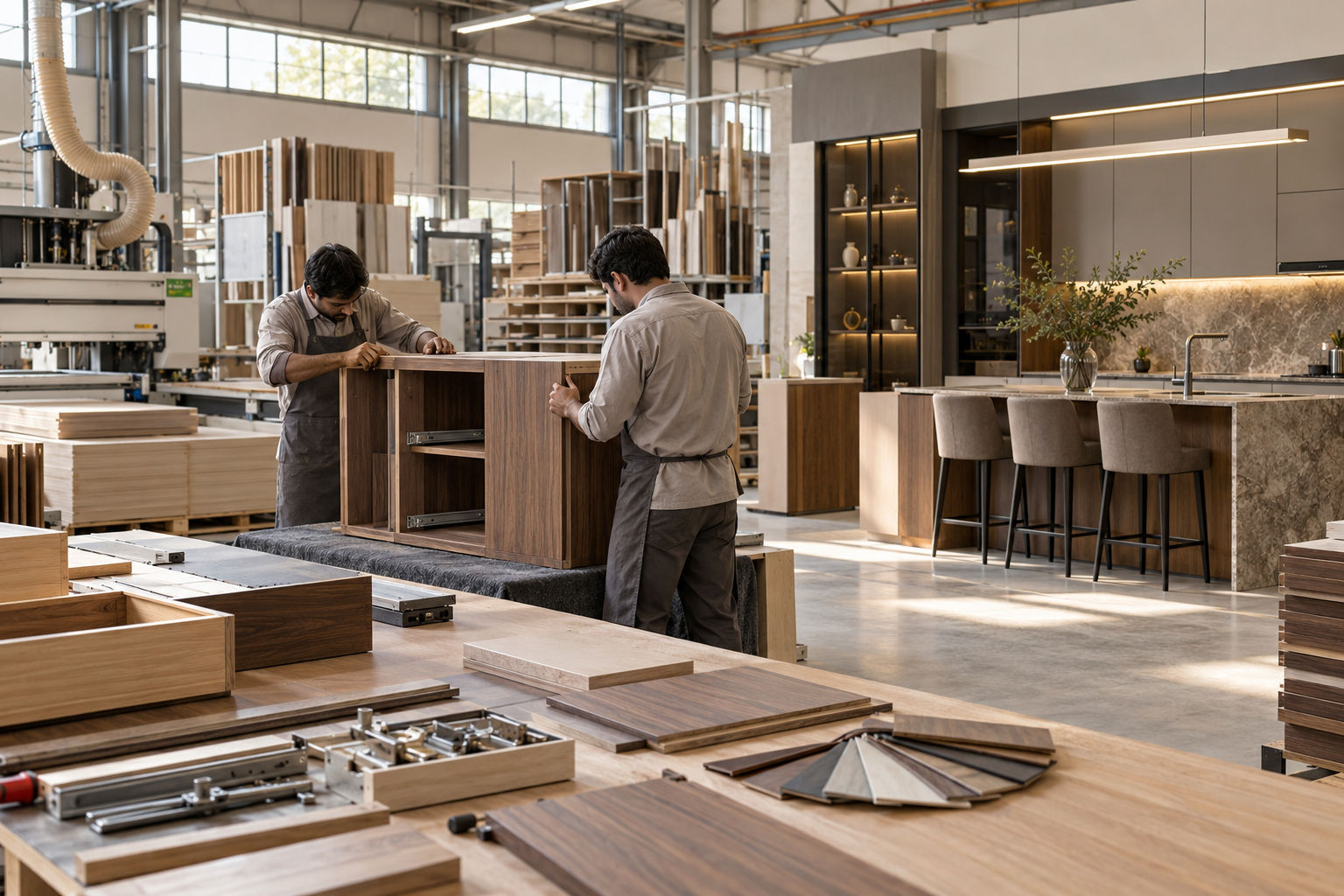
For a customised TV wall, designs can be planned according to the room’s dimensions, storage needs and preferred style rather than standard furniture sizes. Ddesignery also has an in-house manufacturing facility and follows a process covering consultation, site measurement, design, production, delivery and installation.
The company also provides experience centres where customers can explore its modular solutions. Its wider product range makes it easier to coordinate the TV unit with other interior elements for a cohesive and well-planned home.
Conclusion
The best TV unit is not always the biggest or most decorative. A successful design considers the wall, TV size, seating, storage, lighting and electrical points together.
Whether you choose a floating console, built-in unit or entertainment centre, customised furniture can be designed to suit your space, lifestyle and storage needs. Ddesignery combines customised design, in-house manufacturing and end-to-end execution to create functional TV units tailored to individual requirements, preferences and modern interior styles.
FAQs
Consider the TV size, wall dimensions, viewing height, sofa position, storage needs, electrical points, cable management and room style.
Yes. A floating TV unit saves visual floor space and can make a small living room feel more open.
TV unit storage should match your needs for set-top boxes, remotes, gaming consoles, speakers, books and other accessories.
Yes. The TV unit should coordinate with the sofa, flooring, wall colours and other furniture for a balanced interior.
Yes. Closed cabinets and drawers can hide everyday items, while open shelves can display books and décor.
Plan electrical points and cable routes before installation. Concealed wiring channels and cabinets can keep cables organised and out of sight.
A full-width TV unit, built-in cabinets, wall panelling and selected display niches can make effective use of a large wall.
Key 2026 trends include warm wood finishes, low-height units, concealed storage, fluted details, integrated lighting and clean designs.
Yes. Ddesignery offers customised TV units designed according to the available space, storage requirements and preferred interior style.
Yes. Ddesignery has an in-house manufacturing facility and provides customised modular furniture through its design, manufacturing and installation process.